

Understanding when and how to provide basic medical care to your pets is just as important as knowing how to provide basic care to yourself or your children. When your pet suffers a minor injury or sickness, do you know how to respond? What supplies should you have on hand? How do you tell when you can treat a problem at home and when you need to seek professional or emergency care? These are all important questions to answer before difficult situations arise.
When it comes to first aid, the most important thing to establish is what level of care you are comfortable providing. If you feel unsure, unsafe, or wary of providing care, you should always seek professional treatment. This is for your safety and the safety of your pet.
Being prepared is the first step to effectively respond to any situation. Therefore, you should create a pet first aid kit. You should keep one in your home and, if you take your pets with you on adventures, one in your car or in a hiking/day pack. You can buy pre-packaged kits or create your own. Basic pre-packaged kits start around $20.00 and can go as high as $100 depending on the contents.
Some good things to keep on hand are: tweezers; bandages; cotton swabs; antiseptic wipes; cold pack; rubber gloves; emergency blanket; scissors; and alcohol pads. Some human medications can also be used on pets, although in smaller doses. You should consult your veterinarian on what is safe to give to your pet and in what situations.
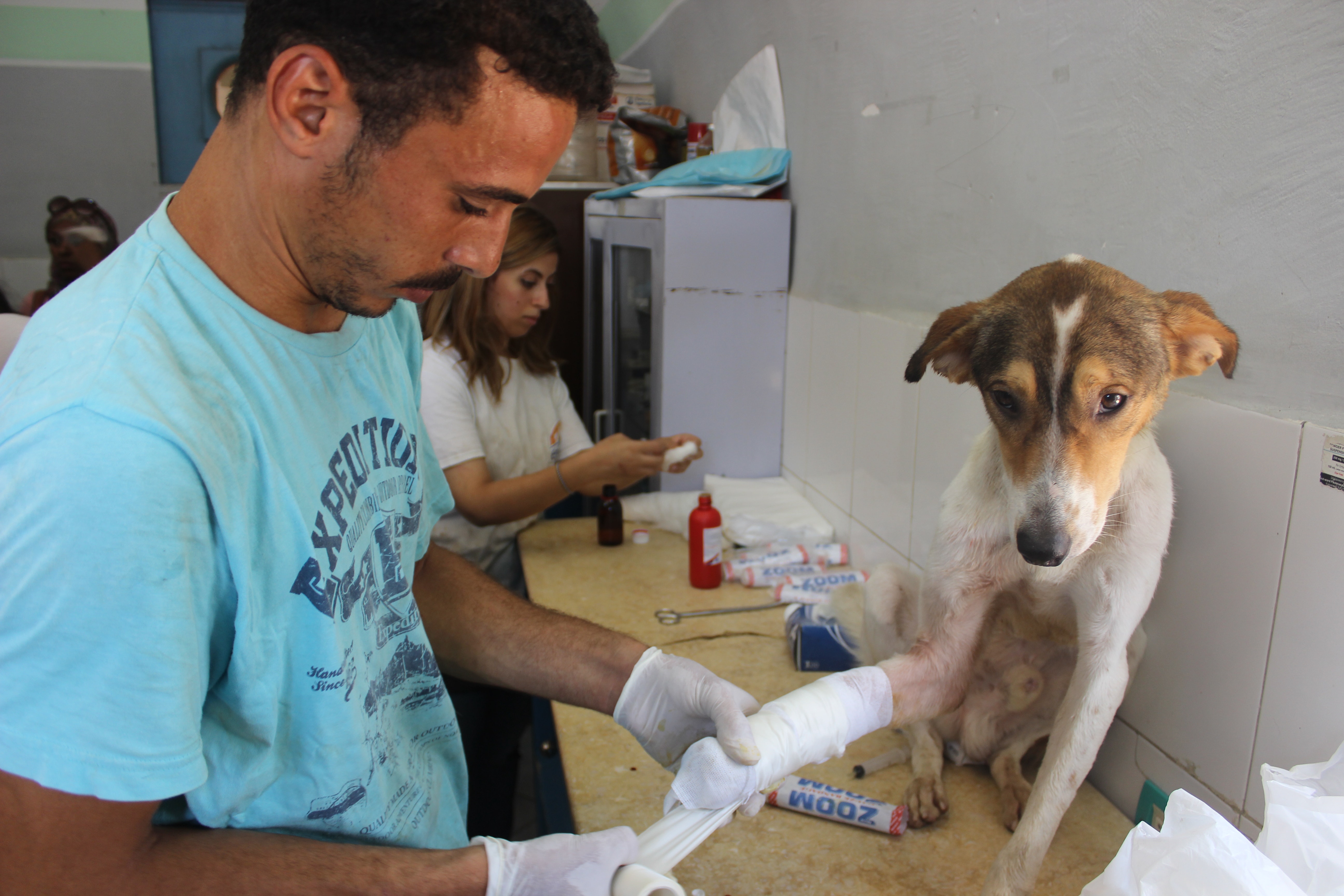
Knowing how to use your supplies is the next step. The American Red Cross offers a pet first aid course. It’s 35 minutes long, offered online, and costs $25.00. You can register on their website. They also have a free app available on Apple and Android. Search “Pet First Aid Red Cross.” There is also free information available from the American Veterinary Medical Association website with quick links to help you respond to the most common issues including bleeding, burns, heatstroke, and other conditions. You should review these procedures frequently and before any emergency situations arise. Trying to learn how to assist during a scary situation can lead to dangerous mistakes.
Finally, you need to know what injuries and illnesses to tackle on your own and which should be immediately tended to by a veterinarian. If you suspect your pet has ingested a poison, always call the pet poison hotline (ASPCA’s number is 1-888-426-4435) for advice.
Minor cuts and scrapes can usually be cleaned at home and watched for signs of discomfort or infection (swelling, excessive licking). Signs of heatstroke should be attended immediately by moving your pet to a cooler area and then seeking medical attention. In all cases, you should be aware that hurt or sick animals can often lash out, even at the most dedicated owners. Always keep your safety in mind and consider creating a makeshift muzzle before treating any injuries.
The idea of learning to treat your pet may feel overwhelming but it is a vital skill for the health of your furry loved ones. So, take the time to learn the basics, gather the supplies, and be prepared ahead of time. You and your pet will be thankful if and when the situation arises.
 harleys hope