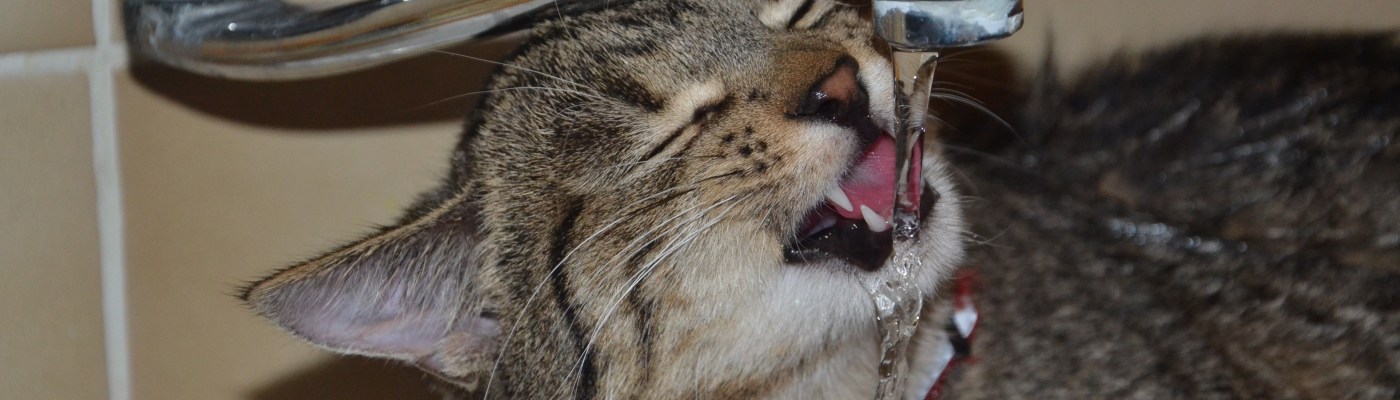


As we move into the summer months and the days get hotter, hydration becomes even more important. For ourselves, and our pets. Knowing how much water pets need and how to recognize the signs of dehydration are important skills. The summer heat, low humidity, and high altitude of our home mean dehydration can happen very quickly and be deadly. Luckily, it can also be prevented.
According to the Cornell University College of Veterinary Medicine, cats need about four ounces (half a cup) per five pounds of bodyweight per day. An average 10 pound housecat needs about one cup of water a day. Cats that eat wet food may get a substantial fraction of their water from that food and therefore not drink as much. Dehydration in cats presents as weakness, poor appetite, and dry mucus membranes. Cats are especially prone to kidney disease which makes proper hydration incredibly important. You can encourage your cat to drink more water by making sure a fresh source is always available, experimenting with various forms of fountains, and adding water to their food. If you suspect your cat is dehydrated or notice they are not consuming water, immediately consult your veterinarian.
As a general guideline, dogs need about one ounce of water per pound of bodyweight each day. This amount can very wildly depending on the weather, your dog’s activity level, and whether or not you feed wet food, but it’s a good place to start. As with cats, you can encourage your dog to drink by always having a fresh water source available. If you take your dog on your outdoor adventures, make sure you pack water for him and yourself. You can buy inexpensive collapsible water bowls to make it easier to serve water on the go and you should offer water regularly, whether or not your dog is showing signs of heat or thirst. Signs of dehydration in your dog include dry nose and mouth and sticky or pale gums. You can check for hydration by using what is known as the pinch test. GENTLY pinch the skin between the shoulder blades, pull it up then release. If the skin does not quickly return to normal, that is a sign your dog needs water and may be suffering from dehydration.
As with all animals, dehydration can quickly become and emergency so consult your veterinarian if you suspect your dog is suffering. The summer months are adventure months and Colorado has as many adventurous dogs as it has people. But, since they cannot advocate for themselves, here are a couple reminders. On an 80 degree day the inside of a car can reach well over 100 degrees in just 20 minutes. Never leave your pet unattended in a parked vehicle. You may intend to be gone for “only a minute” but the risk is simply too great. A dog can die in a hot car in less than 15 minutes because they do not have effective ways to cool their bodies quickly enough. In Colorado you can be charged with animal cruelty for leaving a dog in a hot car and we have a hot car immunity law that means a good Samaritan, under the right circumstances, can break into your car to rescue a pet. If you find an animal in a locked car and they are in distress, call the authorities and follow their directions. Overheated dogs should be moved to a cool environment immediately and given cool, NOT cold water, to slowly cool their systems.
Finally, when taking your dog out for a day on the town, or maybe to one of our many
dog friendly establishments, keep in mind they do not wear shoes. On an 87 degree day the
pavement can reach 143 degrees which is hot enough to burn a pet’s paws in seconds. As much
as possible, take walks in the early or late hours and stick to dirt trails or grass. If you must be on
pavement and must bring your dog along, invest in protective shoes. They may take some getting
used to so don’t wait until you are on hot pavement to try them out. If you suspect your dog has
burned its paws (indicated by blistering, peeling, cracking, limping, or chewing) take action
immediately. Remove them from the hot surface and cool their paws with room temperature water. Clean the affected area and wrap it loosely if the skin is broken. Most importantly, contact your veterinarian. Summer is a great time to have a four-legged companion to take on adventures. Just
remember they rely on you so look out for them.

