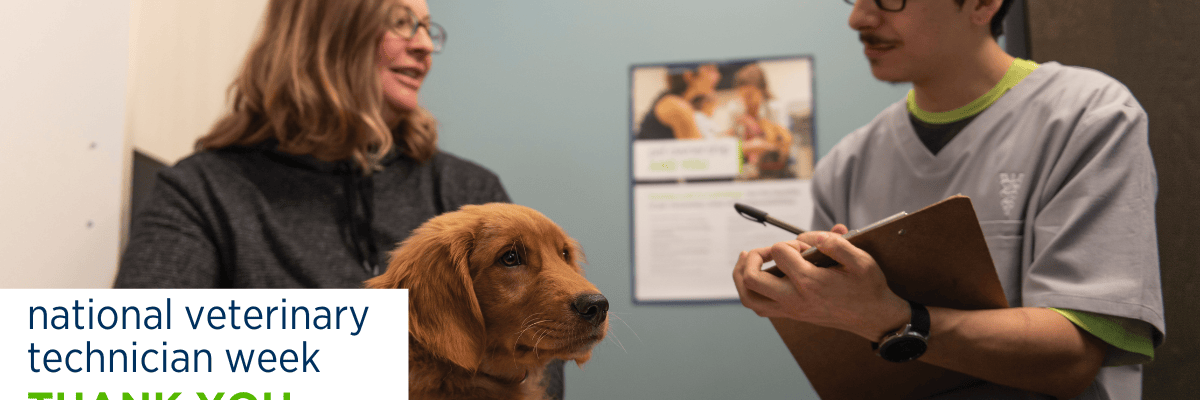

If asked, most people could easily identify what a veterinarian is and what they do, but the work of a veterinary technician is sometimes overlooked. October 18-24 is Veterinary Technician Week, which makes this the perfect time to highlight these hardworking men and women who care for our pets. First celebrated in 1993, this week was created to recognize the many contributions of these often unsung heroes of pet medicine. Per the National Association of Veterinary Technicians in America, this year’s theme is “Credentialed Veterinary Technicians: Endless Compassion, Expert Care; Celebrating the Soul of Veterinary Medicine”.
Veterinary technicians are highly educated individuals who perform many of the same tasks as veterinary doctors. They are trained to administer medications, accomplish lab work, complete imaging (such as X-rays or MRIs), assist in surgery, and perform a variety of medical procedures. They work under the supervision of a veterinary doctor and are often the patient point of contact for pet care. Appointments with a veterinary technician for routine care (such as vaccinations) are also usually less expensive because they do not require the doctor fee. The only tasks technicians cannot perform are to diagnose, prescribe, and perform surgery. Some states may have further restrictions, but Colorado just passed a law last year that allows veterinarians to delegate nearly any medical task to a technician. It is hoped this law will help alleviate the workload of our veterinary doctors.
In order to become a veterinary technician, a person must complete mandatory education and certification. A two-year associate’s degree from an American Veterinary Medical Association accredited school is required. Colorado only has seven fully accredited programs in the state, which means it is very important to double-check any program one is interested in to ensure it will get you where you want to go. In addition to the coursework, clinical hours are necessary. In Colorado, the amount of hours vary depending on the program but are usually at least 135 hours outside of the classroom. These allow students to get hands-on experience and give the opportunity to identify specialty areas where they might want to focus. Finally, there is the Veterinary Technician National Examination. Although this exam is the final national requirement to become a fully certified technician, some states do have additional credentialing processes. For example, Colorado also requires technicians to maintain a registration with DORA, the Department of Regulatory Agencies.
Veterinary technicians are highly trained, highly motivated individuals who dedicate their lives to the care of animals. From the smallest pet to the largest livestock, technicians perform nearly all the daily tasks necessary to keep our companions and our herds healthy. Next time you are at your vet’s office, don’t forget to thank a technician.